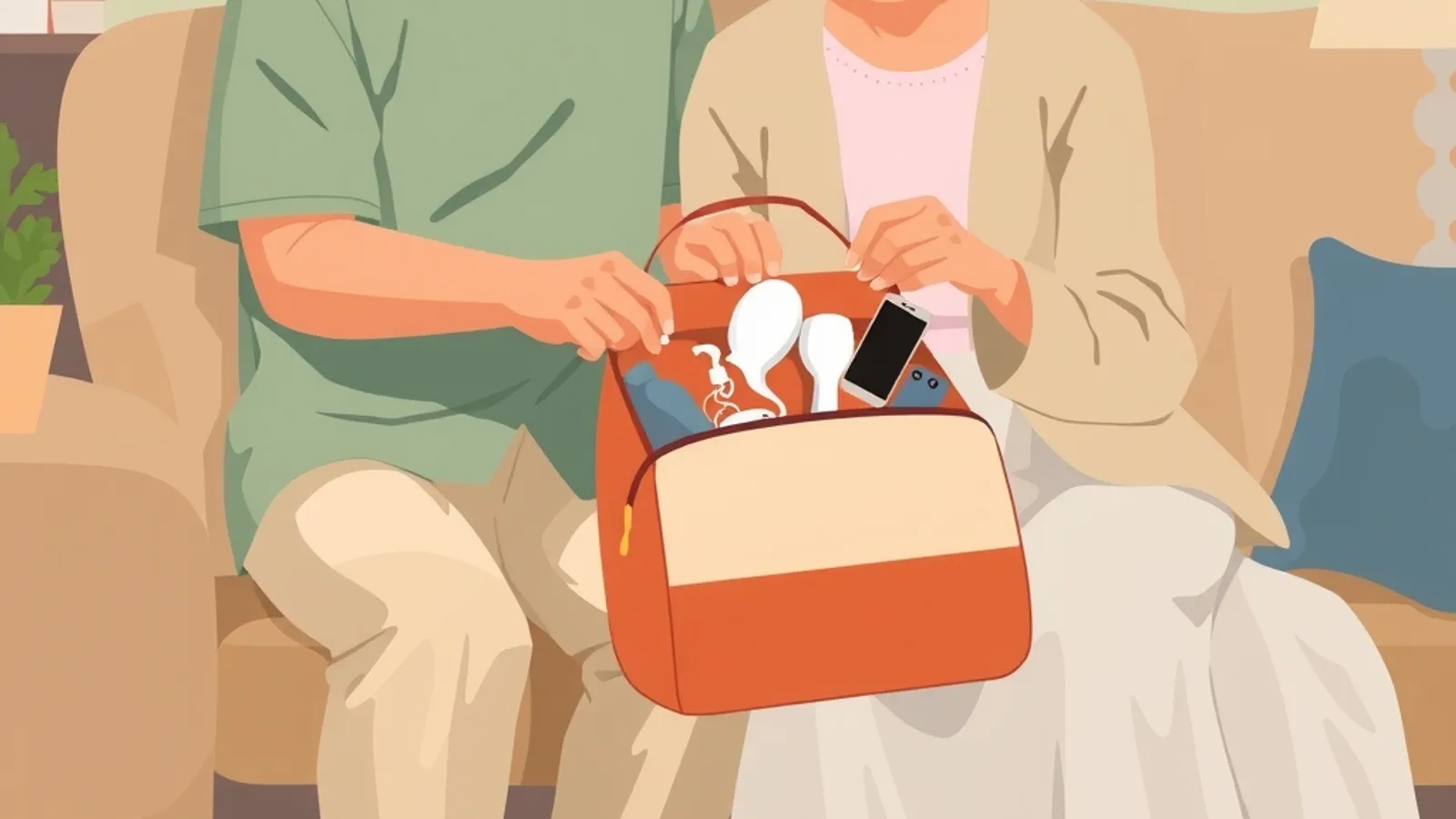
A hospital stay can bring a lot to think about, especially when it happens unexpectedly. Packing a few familiar essentials—and making important information easy to find—can help your relative feel more comfortable and help staff understand their needs.
Use this as a general checklist, not a rulebook. Hospitals have different policies, and an emergency admission may leave little time to pack. If the hospital has sent instructions, follow those first. The hospital bag checklist printable can help you keep track of what is packed.
Start with the essentials
Before packing, check whether the stay is planned or urgent, how long it may last, and whether the hospital has asked you to bring particular items. If you are unsure about equipment, medicines or valuables, call the ward or admissions team when practical.
Pack items in an easy-to-carry bag. Keep documents and medicines information together in a clearly labelled folder or pouch, and put everyday items where your relative or their support person can find them. A short checklist inside the bag can make it easier to repack when it is time to leave.
Clothes and footwear
Choose comfortable, easy-to-change clothes. Hospital gowns may be provided, but personal clothing can be useful if staff say it is suitable and your relative prefers it.
Consider packing:
- A few changes of loose, comfortable clothing, such as tops and trousers or nightwear.
- Underwear and socks, with extra items if the stay may be longer.
- A dressing gown or cardigan for warmth, if allowed.
- Well-fitting, non-slip footwear that is easy to put on and take off.
- A set of clothes for going home, including weather-appropriate outerwear.
Avoid packing more than needed. Space may be limited, and belongings can be harder to keep track of when there are many items. Ask staff before bringing special clothing or footwear that might interfere with care.
Toiletries and daily-use items
Pack familiar toiletries in small, clearly labelled containers where possible. Useful items may include a toothbrush and toothpaste, hairbrush or comb, deodorant, moisturiser, shaving items and tissues. A denture cup or case may also be useful.
Check with the hospital before bringing items that could be unsuitable on the ward, such as aerosols, glass containers, electrical appliances or strongly scented products. If your relative uses a mobility aid or other personal equipment, ask the team whether to bring it and how it should be stored.
Medicines information and health documents
Bring an up-to-date list of all medicines your relative takes, including prescription medicines, non-prescription products, vitamins and supplements. Record names and, if known, how and when each is usually taken. Note any allergies or past reactions, and include the name and contact details of their usual pharmacy or prescriber if helpful.
A list can help staff ask the right questions, but it does not replace their checks. Do not assume that medicines brought from home should be taken or given during the stay: follow the hospital team’s instructions. If staff request medicine containers, bring them in their original packaging where possible. Keep medicines secure and hand them over as directed.
Other useful information may include:
- Identification and admission paperwork requested by the hospital.
- Relevant health records or a concise history of important conditions, procedures and allergies.
- Contact details for family members, the usual GP or other care professionals.
- Any documents the hospital has specifically asked you to bring.
The medical history summary provides a place to gather key health details. Keep the information current and make sure it is easy to find rather than buried at the bottom of the bag.
Label glasses, hearing aids and dentures
Glasses, hearing aids and dentures help a person stay connected and comfortable, but small items can be misplaced during a busy stay. Label cases with your relative’s name and, if appropriate, a phone number. Ask staff how to store and charge devices safely, and bring any required charger or battery supplies if the hospital permits them.
Tell staff which aids your relative uses and where they are kept. A hearing aid case, glasses case and denture container can help keep items together when they are not in use. Avoid placing loose devices on bedding or meal trays, where they could be overlooked.
Comfort items and notes for staff
A familiar, washable item—such as a small photo, a favourite book or a soft shawl—may help make an unfamiliar room feel more reassuring. Check with the ward before bringing anything valuable, bulky or difficult to clean. Put the person’s name on personal belongings where possible.
Share practical information that helps staff support your relative as an individual. For example, note their preferred name, how they communicate, what helps them feel at ease, their usual routine, important cultural or spiritual preferences, and how they manage hearing, vision or mobility. Mention if they need an interpreter or communication support.
The All About Me profile is a simple way to prepare these notes. Offer it to staff and ask where it should be kept. Include only information your relative is comfortable sharing, and update it when their preferences or needs change.
What to leave at home
Unless the hospital specifically asks for them, leave valuables and irreplaceable items at home. This includes jewellery, large amounts of cash, expensive electronics and sentimental objects that would be difficult to replace. Keep bags and other belongings to a manageable amount, and avoid bringing food or drink without checking first, as the hospital may have instructions for your relative.
If you do bring a phone, tablet or other device, label it and check the ward’s rules about charging and use. Make sure a family member knows what has been brought in and takes responsibility for belongings when possible.
A quick checklist before you go
- Hospital admission instructions and requested documents
- Current medicines list, allergy information and relevant health summary
- Comfortable clothes, sleepwear, underwear and suitable footwear
- Basic toiletries and any permitted personal-care items
- Labelled glasses, hearing aids, dentures and their cases or supplies
- Contact details for family and relevant care professionals
- A short note about communication, routines and personal preferences
- One or two permitted comfort items
- A labelled bag, with valuables left at home
For a planned admission, pack ahead and confirm what the hospital expects. For an urgent trip, take the essentials you can gather safely; do not delay getting help to find every item. The care team can explain what is needed once your relative arrives. For general guidance on preparing for hospital and supporting an older person during a stay, see the NHS guidance on going into hospital and the US National Institute on Aging’s hospitalisation tips for older people and carers.
Sources
- Going into hospital — NHS
- Hospitalization: Tips for Older People and Caregivers — National Institute on Aging
CareTaskNest helps families organise everyday care. It does not provide medical advice, diagnosis or treatment. In an emergency, call 999 (or 112).