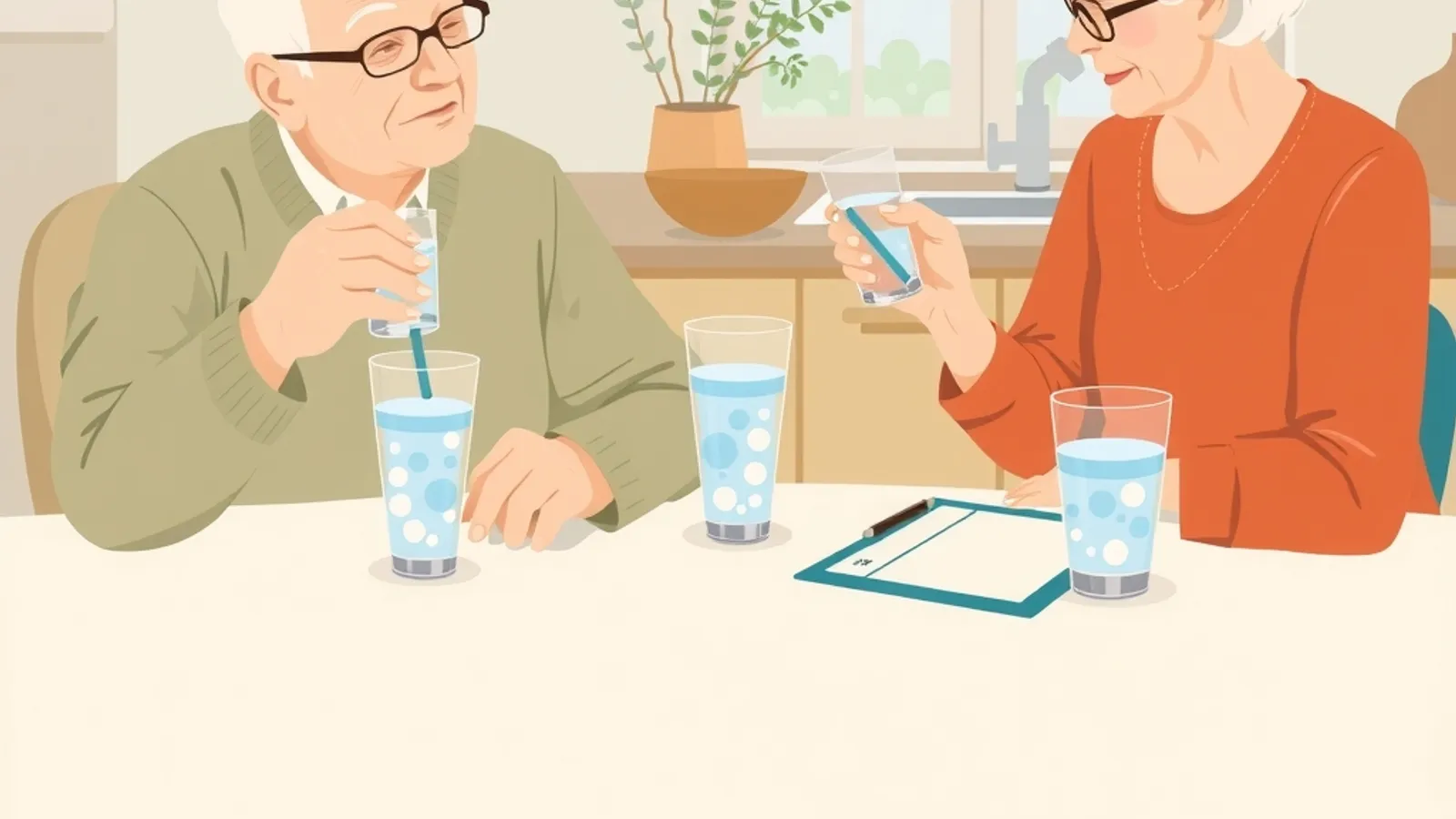
A drinking log—sometimes called a Trinkprotokoll or fluid intake chart—turns a vague concern into a clearer picture. It can show how much an older adult drinks throughout the day, what they prefer and when they tend to miss drinks. It is a record to discuss with a care professional, not a test or a reason to pressure someone.
Why an older adult may drink less
Thirst can become less noticeable with age, so someone may not think to drink even when fluids would be welcome. Other everyday barriers can matter too: a drink may be out of reach, opening a bottle may be difficult, or getting to the toilet may feel worrying. Changes in memory, low mood, nausea, illness or difficulty swallowing can also affect drinking.
Some people have been advised to limit fluids because of a health condition. That instruction matters: do not increase their intake or change a prescribed limit without checking with their clinician. If swallowing seems difficult, ask for professional advice rather than trying to solve it by offering different drinks.
Agree a personal daily target
There is no one amount that is right for every older adult. Needs can vary with health, daily routine, weather, activity and the advice a person has already received. A doctor, nurse or dietitian who knows their situation can set or confirm a suitable target and explain what counts towards it.
At the conversation, ask:
- What daily amount should we aim for, and over what time period?
- Does the target include drinks only, or foods such as soup and other items with a high fluid content?
- Are there any drinks or situations we should take particular care with?
- What should we do if the person is unwell, is drinking much less than usual, or cannot keep fluids down?
- Are there signs that should prompt a same-day call or urgent help?
Write the agreed target and any limits at the top of the chart. If different professionals give different instructions, ask the care team to clarify which plan to follow. For general information on dehydration and symptoms, see the NHS guidance on dehydration and MedlinePlus information on dehydration.
How to fill in a fluid intake chart
Use the fluid intake chart printable for a paper record, or another format that is easy for the household and care team to use. Keep the chart somewhere convenient, but respect the person’s privacy.
- Choose a clear start and end time. A daily chart commonly follows the person’s waking day. Use the same period each day so entries are easier to compare.
- Record the time and drink. Note what was offered and, most importantly, how much was actually consumed. If a cup is only partly finished, record the amount drunk rather than the full cup.
- Use consistent units. Choose millilitres, fluid ounces or a marked cup, and stick to the same unit. If you do not know the cup’s capacity, measure it once with a kitchen measuring jug.
- Follow the clinician’s instructions on what to count. Record drinks such as water, tea, coffee, milk or juice if appropriate. Note soups or other foods only if the care team says they count towards this person’s target. Do not assume every chart uses the same rules.
- Add useful context. Brief notes can include a drink declined, a spill, a favourite drink or a change in appetite. Keep comments factual and respectful.
- Add up the total at the agreed time. Compare it with the person’s individual target, if one has been set. If you missed an entry, mark it as unknown rather than guessing.
A log is most useful when it is accurate and manageable. You do not need to monitor every sip indefinitely unless the care team asks you to. Bring the chart to an appointment or share it with the relevant professional if you are concerned about a pattern. The carer’s daily log generator and daily carer’s log printable can also help keep hydration notes alongside meals, routines and care handovers.
Make drinking easier and more appealing
Small adjustments can help without turning drinks into a source of conflict:
- Offer a drink at familiar moments, such as with meals, after a walk around the home or when settling in to watch television.
- Keep a preferred cup and a drink within easy reach, if it is safe to do so. Check that lids, straws or handles suit the person’s needs and care instructions.
- Ask what they would enjoy. Offer a choice of suitable drinks and temperatures rather than assuming water is their preference.
- Offer smaller amounts more often if a full cup feels off-putting. Record what is taken and let the person decide whether they want more.
- Make drinks part of shared routines. Sitting down together can feel more inviting than repeatedly reminding someone.
- If using ready-made drinks or changing what is offered, check any dietary or care-team guidance first.
These are invitations, not instructions. If a person refuses, avoid arguing or forcing them to drink. Note the refusal and try again later if appropriate. Tell their clinician if low intake continues or represents a noticeable change from their usual pattern.
Signs to notice and when to ask for help
Possible signs of dehydration include thirst, a dry mouth, darker urine, passing urine less often, tiredness or dizziness. These signs can have other causes too, and a chart cannot diagnose dehydration. Older people may not describe thirst clearly, so pay attention to changes from their normal routine as well as what they say.
Contact a doctor or local health service for advice if you are worried about symptoms, if the person is drinking much less than usual, or if an illness is making it hard to take fluids. Ask promptly if there is new difficulty swallowing. Do not wait for the chart to show a full day’s total when the person appears unwell.
Sudden severe confusion, being difficult to wake or other serious or rapidly worsening symptoms need urgent assessment. Use your local urgent or emergency service. The NHS lists symptoms that require urgent medical help in its dehydration guidance.
Keep the log useful, not burdensome
A chart works best as a shared aid: the older adult, family members and paid carers can all make entries using the same units and instructions. Agree who will total it and who should be contacted if the target is repeatedly missed. Keep the plan visible to the people providing care, while protecting private information.
The aim is not to reach a generic number at any cost. It is to understand the person’s usual intake, follow their clinician’s advice and make it easier for them to drink in ways that fit their preferences and needs.
Sources
- Dehydration — NHS
- Dehydration — MedlinePlus, U.S. National Library of Medicine
CareTaskNest helps families organise everyday care. It does not provide medical advice, diagnosis or treatment. In an emergency, call 999 (or 112).