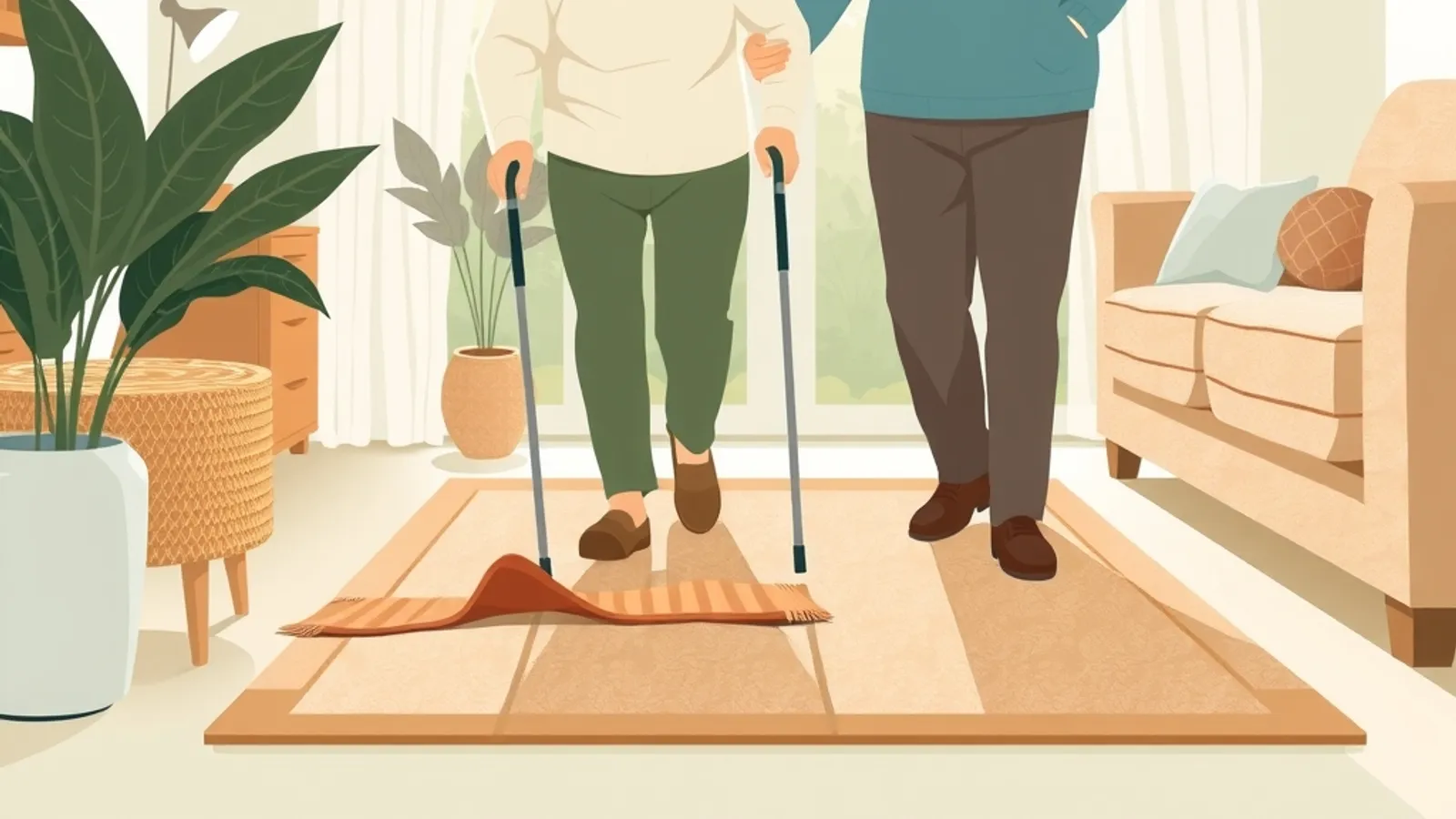
A fall can affect confidence as well as physical safety. You cannot remove every risk, but you can make everyday movement safer and spot changes early. Start with the person’s own priorities: ask what feels difficult or worrying, and make changes together rather than taking over.
Fall risks can change over time. A new near miss, a change in walking, or growing hesitation on stairs is worth noticing—even if there has not been an injury. The World Health Organization explains that falls can have several contributing factors, so prevention often means looking at more than one part of daily life (WHO: Falls).
A practical checklist for home and daily routines
Walk through the home together at a calm time. Ask the older person where they feel least steady, and check the routes they use most: bed to bathroom, kitchen to table, and entrances or stairs.
Clear the way
- Move loose rugs, trailing cables, clutter and other trip hazards out of walking routes. If a rug needs to stay, ask a local occupational therapist or other relevant professional about safer options.
- Keep frequently used items within easy reach. Avoid storing essentials high up or where someone has to bend, stretch or climb.
- Make stairs and hallways easy to navigate. Keep handrails secure and clear of belongings.
- Use lighting that makes steps and changes in floor level easy to see, including at night. Put a reachable light source near the bed.
Make everyday tasks easier
- Check that bathroom surfaces and entryways are not left wet or slippery. Ask a health professional about suitable grab rails or other equipment rather than guessing what will fit.
- Choose well-fitting, stable footwear with a secure fastening and a sole that grips. Avoid walking in socks on slippery floors.
- Keep a phone or another way to call for help within reach, especially when the person is alone.
- Plan unhurried transitions. If the person feels unsteady when getting up or walking, pause and let them set the pace. Ask a health professional what support is appropriate.
You can use the Home safety checklist for seniors to organise a room-by-room check. The National Institute on Aging also suggests reviewing home hazards, vision and medicines as part of fall prevention (NIA: Falls and fractures in older adults).
Notice changes and ask for a review
Pay attention to patterns rather than waiting for a serious fall. Note near misses, new difficulty standing or walking, holding onto furniture, avoiding activities, or needing more help with everyday tasks. A change in confidence may be important even when the person has not been hurt.
Arrange a conversation with their doctor or another appropriate health professional if there has been a fall, repeated near misses, a noticeable change in balance or walking, or a new concern about daily safety. Ask whether a review of mobility, vision, hearing, footwear, health conditions or medicines would be useful. Some medicines can contribute to dizziness or unsteadiness, but do not stop or change medicines without advice from the prescriber or pharmacist.
Ask what kinds of activity are safe and suitable for the person. Staying active can support strength and balance, but the right activity depends on the person’s situation. A doctor, physiotherapist or other qualified professional can help plan an appropriate approach. Avoid encouraging someone to try unfamiliar exercises or equipment without guidance.
For an appointment, bring specific examples: when a fall or near miss happened, what the person was doing, and whether anything seemed different that day. The Falls record can help capture this information, and an appointment preparation sheet can help you organise questions.
What to do after a fall
First, check whether the person is responsive and whether there is an immediate danger. Do not rush to lift them if they may be seriously injured or lifting could hurt either of you. Call your local emergency number if they are badly hurt, cannot get up, have severe pain or bleeding, seem newly confused, or you suspect a serious injury. If you are unsure what to do, contact local urgent medical services for guidance.
If they hit their head, or develop concerning symptoms after a fall, seek prompt medical advice. Even when there is no obvious injury, tell their doctor or care team about the fall—especially if it is not the first one or their movement has changed. Follow local emergency and health-service guidance; the right response can depend on the circumstances.
When the immediate situation is safe, note the date and time, where the fall happened, what the person was doing, any injury or symptoms, and who was contacted. Share the notes with family or care staff, with the person’s agreement. The caregiver daily log generator can help keep observations in one place.
As needs change: keep the plan flexible
If the person has not fallen but you notice new hazards or hesitation, start with a conversation and a home check. If there has been a fall or mobility has changed, seek professional input and agree on practical next steps together. If falls or support needs continue to increase, ask the care team whether a home assessment or additional help would be appropriate. These are useful prompts, not fixed stages: people’s needs vary, and changes do not follow one predictable path.
Review the plan after a fall, a change in health or routine, a move, or new equipment. Make sure helpers know what support the person prefers, how to reach the family or care team, and what to do if there is a concern. A shared weekly care schedule can help divide check-ins and practical tasks.
Look after yourself, too
Fall prevention is easier to sustain when it is shared. Ask relatives, friends or paid helpers to take specific tasks, such as checking a light, accompanying the person to an appointment, or keeping walkways clear. Keep the person involved in decisions and respect their privacy and independence as much as possible.
If you are becoming exhausted or worried about being available at all times, tell someone you trust and ask the care team or local support services what help is available. Taking a break is part of making care workable, not a failure. Small, agreed changes and clear communication can help the older person feel safer without making home feel like a list of restrictions.
Sources
- Falls — World Health Organization
- Falls and fractures in older adults — National Institute on Aging
CareTaskNest helps families organize everyday care. It does not provide medical advice, diagnosis or treatment. In an emergency, call your local emergency number.