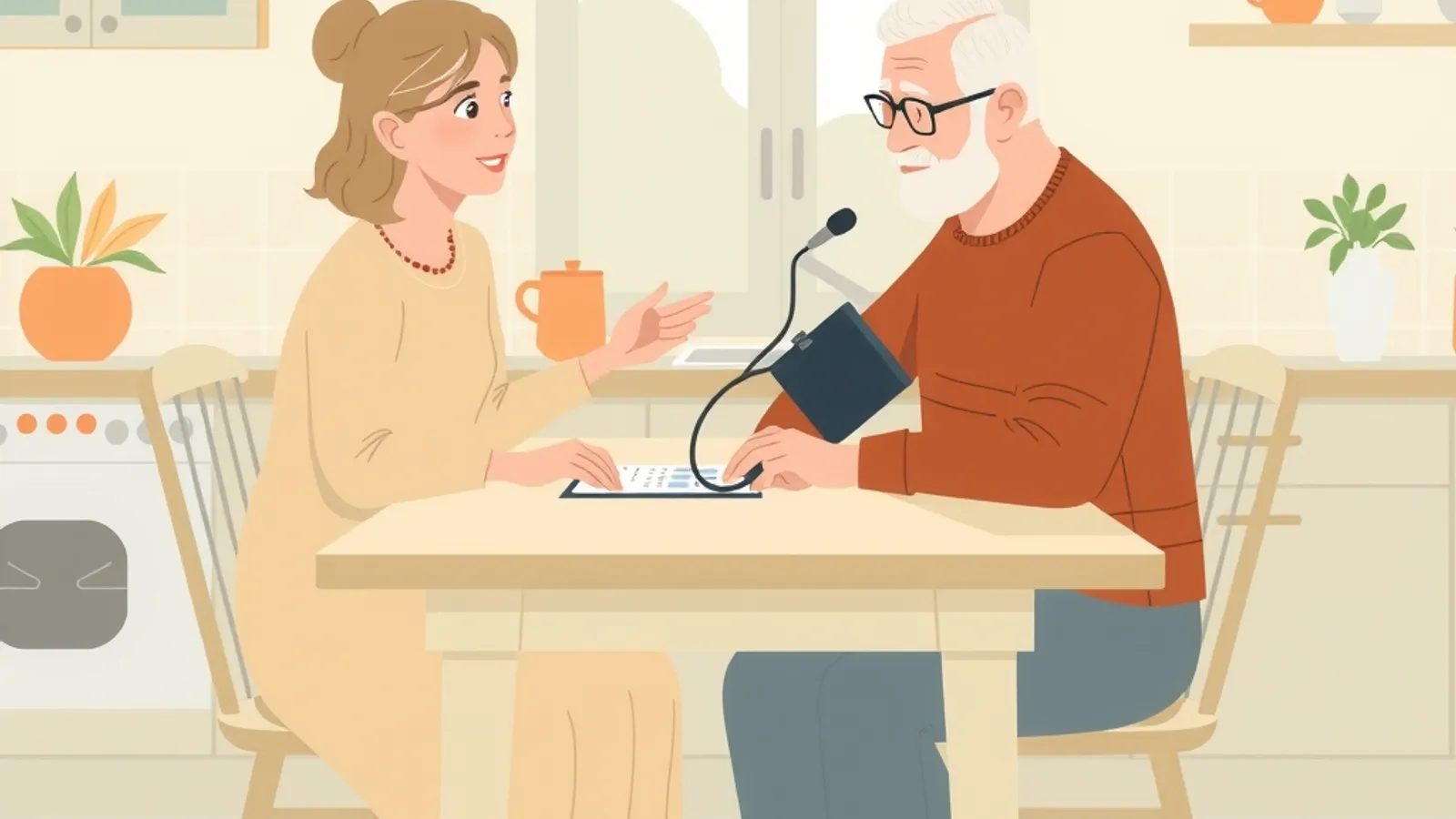
A home vital signs chart can make it easier to share useful information with a GP or other care professional. It is a record, not a diagnosis: one reading on its own may not explain what is happening, and the care team should set any personal targets or instructions. Use the vital signs log, blood pressure log or blood sugar log to keep readings together.
Agree on a plan first
Ask the person’s GP or care team which measurements to take, how often and at what times. Check whether readings should be taken before or after meals, activity or medicines. Ask what results should prompt a repeat measurement, a phone call or urgent help. Write those instructions on the chart or keep them beside it.
There are no single target values or thresholds for calling that suit everyone. They can vary with a person’s health and the reason for monitoring. Do not change medicines or other care based on a chart unless the care team has instructed you to do so.
Choose one person to keep the chart up to date, or agree how family members will hand over readings. Note the date, exact time, result and units, and who took the measurement. Bring the chart—or a clear photo of it—to appointments.
Make readings easier to compare
Try to use the same device and method each time. Check that the equipment is clean, in working order and used according to its instructions. Record the device or method if it changes. If you are unsure whether a reading is reliable, note that rather than quietly leaving it out.
Add context that could help explain a change: symptoms, recent activity, whether the person had just eaten, or anything unusual about the measurement. Keep notes factual and brief. If a reading is repeated, record each result and why it was repeated; don’t replace the first one with the second.
Blood pressure
Use a blood pressure monitor that fits the person and follow its instructions. The American Heart Association advises resting quietly before a home reading, sitting with your back supported and feet flat, and placing the cuff on bare skin with the arm supported at heart level. Use the same arm each time unless the care team says otherwise. Avoid talking during the measurement. See its guide to monitoring blood pressure at home.
Write down both numbers exactly as shown, in the order displayed, along with the time and arm used. If the care team has asked for more than one reading at a sitting, record each one and follow their instructions about the timing between readings. Note whether the person had been resting or had recently been active.
Pulse
Record the pulse in beats per minute, if the device displays it, and note whether it felt regular or irregular if you measured it by hand. For a manual check, use the method a healthcare professional has shown you; if you have not been shown, ask them to demonstrate it. Keep the person still and resting for the period recommended in the care plan, and use the same method each time.
Write down the time and circumstances, such as after activity or during a period of discomfort. A monitor may show a pulse along with blood pressure, but it is useful to note which device produced the result. MedlinePlus explains that vital signs, including pulse, are measurements that can be recorded and compared over time: Vital signs.
Temperature
Use a digital thermometer and follow the manufacturer’s directions for the measurement site—such as the mouth, ear, forehead or armpit. Different sites and methods can give different results, so try to use the same one each time. Record the number, unit (°C or °F), site and time. If the person has just had a hot or cold drink, been outside, or the thermometer was used differently from usual, add a short note.
Do not convert a reading or apply a correction unless the care team or device instructions tell you to. If a result seems unexpected, check the thermometer instructions and the care plan for whether and how to repeat it. The NHS offers general information about fever in adults; the person’s own care team should advise what their reading means in their circumstances.
Blood sugar
Only record blood sugar if the person has been asked to monitor it or has a care plan for doing so. Follow the meter or sensor instructions, including any guidance on preparing the skin and using or caring for the equipment. For a finger-prick meter, note the result and the unit shown. Record whether it was before or after a meal, and the time in relation to eating, if the plan asks for this.
For a continuous glucose monitor, record the displayed value and any relevant trend or alert as directed by the care team. Note symptoms or unusual circumstances, such as illness or a missed meal, if relevant. Do not change food, medicine or other care based on a result unless the person’s plan says what action to take. The US National Institute of Diabetes and Digestive and Kidney Diseases explains blood glucose monitoring, including recording results and discussing them with a healthcare professional.
What to write on the chart
A useful entry includes:
- Date and exact time.
- Measurement and units, written as displayed.
- Method or site used, such as thermometer site or blood pressure arm.
- Relevant context, such as rest, activity, meal timing or symptoms.
- Any repeat result and the reason for repeating it.
- What you did next, if you followed an instruction in the care plan, and whom you contacted.
Keep the chart somewhere agreed and private, but accessible to the people involved in care. If different people take readings, make sure they use the same recording format and know where the care team’s instructions are kept.
When to contact the care team
Follow the written plan for what to do when a reading is outside the person’s stated range, when to repeat it and whom to call. If there is no plan, or you are not sure how to interpret a result, contact the person’s GP or care team for guidance rather than guessing. Ask them to explain any instructions in plain language and write them down for other carers.
Do not wait for another reading if the person has severe or sudden symptoms or appears seriously unwell. Use your local emergency number or urgent care service, according to the situation and local guidance. A chart can help responders, but taking measurements should not delay getting help.
Keep the record useful
Bring recent readings to appointments and mention changes in how the person feels, not just the numbers. Ask the care team whether the schedule or recording method needs updating. A consistent chart is most helpful when it reflects what happened, preserves the original readings and stays connected to the person’s own care instructions.
Sources
- Monitoring Your Blood Pressure at Home — American Heart Association
- Vital Signs — MedlinePlus
- Fever in adults — NHS
CareTaskNest helps families organise everyday care. It does not provide medical advice, diagnosis or treatment. In an emergency, call 999 (or 112).