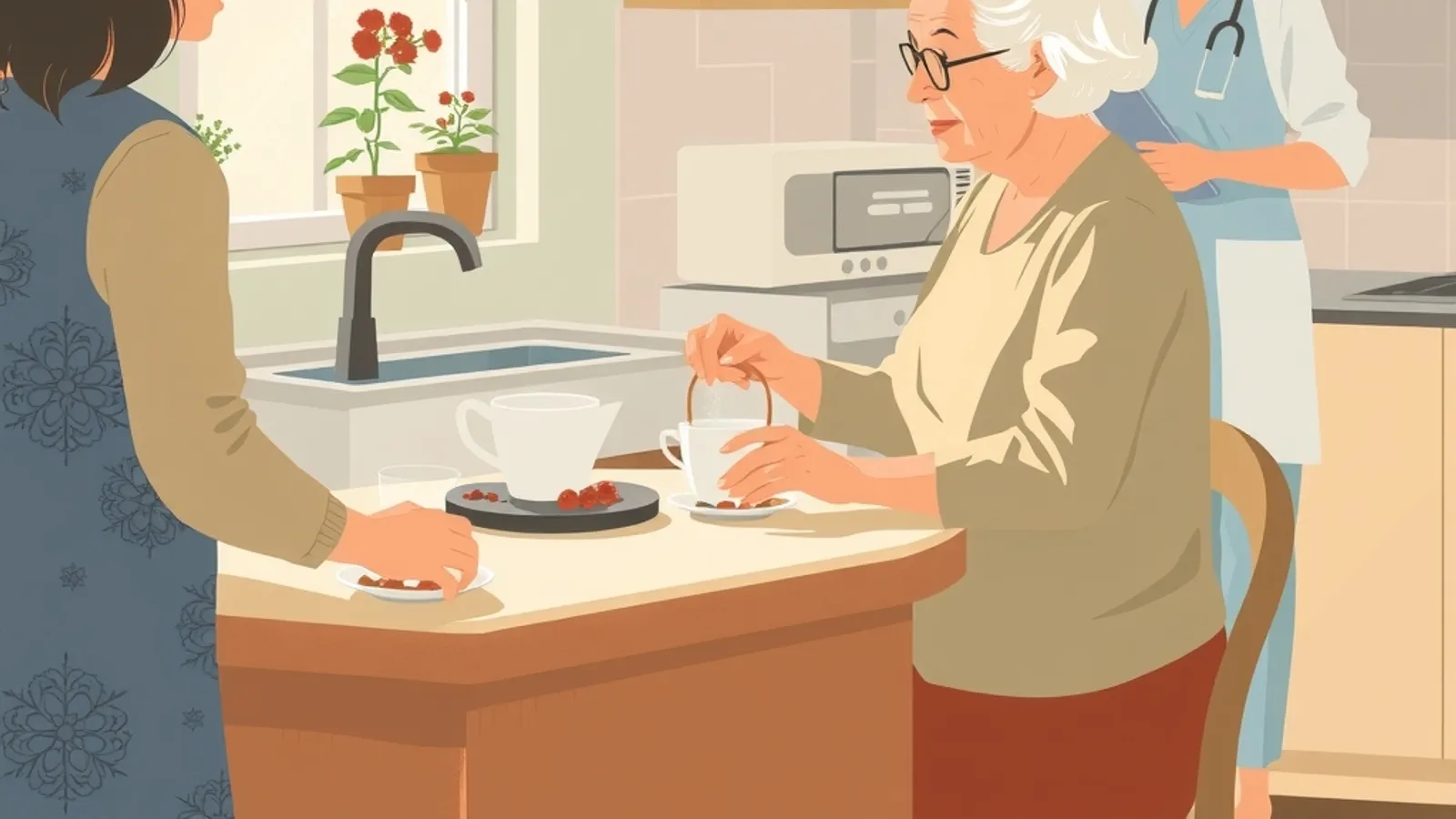
When someone you care about starts needing more help, it can be hard to describe exactly what has changed. ADL and IADL assessments give families and professionals a shared way to talk about everyday tasks: what a person can do, what takes extra effort, and where help is needed. They are useful tools for organising information, not a diagnosis or a verdict on whether someone can live at home.
“ADL assessment” is also used in other languages and care systems—for example, ADL-bedömning in Swedish. IADL means “instrumental activities of daily living”; a common Chinese translation is 工具性日常生活活动能力. The names differ, but the practical question is similar: what support helps this person manage their day safely and in a way that respects their preferences?
What do ADLs and IADLs mean?
Activities of daily living (ADLs) are basic personal tasks. The Katz index commonly looks at six: bathing, dressing, using the toilet, moving between places such as a bed and chair, continence, and eating. Here, eating usually means the physical ability to get food from a plate to the mouth—not shopping for or preparing a meal.
Instrumental activities of daily living (IADLs) are more complex tasks involved in managing a household and daily life. The Lawton IADL scale commonly covers using a telephone or communication device, shopping, preparing food, housekeeping, laundry, getting around, managing medicines, and handling money.
| ADLs: personal basics | IADLs: managing everyday life |
|---|---|
| Bathing and dressing | Shopping and meal preparation |
| Using the toilet and continence | Housework and laundry |
| Moving between places and eating | Transport and communication |
| Managing medicines and money |
A person may manage personal care but struggle with shopping or appointments, or need help with bathing while remaining capable in other areas. Looking at both groups helps avoid treating “independent” or “dependent” as an all-or-nothing label.
How do the Katz and Lawton scales work?
The Katz index of ADL groups observations across its six personal-care areas. In a common version, each area is rated according to whether the person manages it independently or needs assistance. Some versions use a total score; others describe the pattern of abilities instead. The Katz index overview explains the six areas and how the index is used.
The Lawton IADL scale looks at the eight more complex tasks listed above. Common versions assign points for independence and add them to a total, but forms and scoring conventions can differ. If you see “Katz schaal berekenen” or “calculate the Katz scale,” be careful about using an online total as a final answer: the exact form, definitions, and assessor’s purpose matter. A score is a structured snapshot, not a full measure of someone’s needs, abilities, or quality of life. See the Lawton IADL overview for its domains and use.
Neither scale captures every important detail. They may not show how long a task takes, whether someone needs reminders, how much effort it requires, or whether performance varies by time of day. They also do not replace professional judgement. A person’s routines, culture, home layout, communication needs, and preferences can affect what “help” means.
How families can observe needs before an assessment
You do not need to administer a formal scale at home. Instead, collect clear, neutral examples that help a professional understand an ordinary week. If possible, involve your relative in the conversation: ask what they find difficult and what kind of help they would welcome.
For each task, note:
- What happens: for example, “needs help stepping over the bath edge,” rather than “cannot wash.”
- What kind of help is needed: a reminder, someone nearby, help setting things out, hands-on assistance, or someone to do the task.
- How often and when: every day, occasionally, only in the evening, or after a tiring outing.
- How long it takes and how it affects the day: include rest breaks, missed activities, or tasks that get left undone.
- What makes it easier: grab rails, familiar routines, adapted clothing, written prompts, or another person’s company.
- The person’s view: what they want to keep doing themselves, and what support feels acceptable.
For instance, “Can dress independently” may miss that choosing suitable clothes takes repeated prompts, or that fasteners are difficult because of limited hand movement. Record what you actually observe rather than guessing at the cause. If another family member sees a different pattern, note that too; needs can vary from day to day.
A short log is often more useful than trying to remember everything during an appointment. The care needs assessment checklist can help you organise questions, and the carer's daily log can help you record what happened and what support was provided. Keep notes factual and respectful, and store them somewhere private.
What to tell the assessor
Before a meeting, write down your main concerns and a few recent examples. Mention changes from the person’s usual abilities, tasks that are becoming difficult, and any support already provided by family, friends, or paid carers. Explain what is manageable now and what becomes difficult when a regular helper is unavailable. If your relative has communication, hearing, vision, memory, or mobility needs, say what helps them take part in conversations and tasks.
Ask who will carry out the assessment, what information they need, and whether your relative can have someone with them. Processes and eligibility rules vary by country and local area. A local social care service can explain its process; in England, for example, the NHS describes how to request a needs assessment from social services.
The aim is not to prove that someone is incapable. It is to make the support conversation specific: what matters to them, what they can do with or without support, and what help could make daily life more manageable. If abilities change suddenly or you are worried about a new health problem, contact a GP or appropriate local health service rather than relying on a checklist or score.
Sources
- Katz Index of Independence in Activities of Daily Living — StatPearls, NCBI Bookshelf
- Lawton Instrumental Activities of Daily Living Scale — StatPearls, NCBI Bookshelf
- Getting a needs assessment — NHS
CareTaskNest helps families organise everyday care. It does not provide medical advice, diagnosis or treatment. In an emergency, call 999 (or 112).